Beyond Blood Boys: Understanding Bryan Johnson’s Shift to Therapeutic Plasma Exchange
Beyond Blood Boys: Understanding Bryan Johnson’s Shift to Therapeutic Plasma Exchange
For a brief moment, the world was captivated—and perhaps a little horrified—by the image of tech mogul Bryan Johnson, his 17-year-old son, and his 70-year-old father swapping blood in a multi-generational experiment. It was the ultimate sci-fi trope come to life: the wealthy elite harvesting the youth of the young.
The media called it the "Blood Boy" phenomenon. It was sensational. It was viral.
And then, it stopped.
Bryan Johnson, a man who measures everything from his heart rate variability to his nocturnal erections, looked at the data and made a cold, calculated decision: It wasn't working.
"No benefits detected," he tweeted.
But Johnson didn't give up on plasma. Instead, he pivoted to a more established, albeit less sensational, medical procedure: Therapeutic Plasma Exchange (TPE).
This shift—from the vampiric allure of "young blood" to the clinical precision of TPE—is the most important development in his longevity journey. It signals a move away from speculative biology towards a mechanism that is rooted in solid medical science: The removal of age-accumulated toxins.
In this article, we will go beyond the headlines to understand why Johnson made this switch, the fundamental difference between "adding youth" and "removing age," and why TPE is the true future of anti-aging medicine.
The "Young Blood" Fallacy
To understand the shift, we have to understand the original premise. The "young blood" craze was born from parabiosis experiments in the 2000s. Scientists stitched two mice together—one young, one old—so they shared a circulatory system.
The old mice got younger. Their hearts got stronger, their brains grew new neurons, and their fur became shinier. The conclusion seemed obvious: There must be something magical in the young blood—a "fountain of youth" molecule.
This led to a gold rush of startups selling young plasma transfusions for thousands of dollars. It led to Bryan Johnson’s experiment with his son.
Why It Failed for Bryan
Johnson’s rigorous data collection revealed the flaw in the "addition" theory. Simply adding young plasma to an old body is like pouring a cup of fresh water into a muddy swamp. The swamp is still muddy. The "pro-aging" factors in the older body—inflammatory cytokines, senescent cells, and metabolic waste—overwhelm the beneficial factors in the young plasma.
The "young" signals are drowned out by the "old" noise.
The "Old Blood" Reality: It's About Pollution, Not Depletion
This realization aligns with the groundbreaking work of researchers like Dr. Irina Conboy at UC Berkeley. Her lab revisited the parabiosis experiments and asked a different question: Is it the young blood that helps, or is it the dilution of the old blood?
They performed an experiment called Neutral Blood Exchange (NBE). They removed half of an old mouse's plasma and replaced it with saline and albumin (essentially, neutral fluids with no "youth factors").
The results were shocking: The old mice rejuvenated just as much, if not more, than they did with young blood.
The "Inhibitor" Hypothesis
This proved that aging is not primarily caused by a lack of good things (like youth hormones), but by an accumulation of bad things.
- Inflammatory Proteins: Chronic inflammation (inflammaging) damages tissues.
- SASP: "Zombie" cells release toxic chemicals that spread aging to healthy cells.
- Beta-Amyloid & Tau: Proteins that clump in the brain and cause cognitive decline.
- Oxidized Lipids: Damaged fats that clog arteries and disrupt cell membranes.
These factors act as inhibitors. They actively block the body's stem cells from repairing tissues. By removing these inhibitors, you "unblock" the body's natural regenerative capacity.
Enter TPE: The Ultimate Detox
This is why Bryan Johnson switched to Therapeutic Plasma Exchange. TPE is the clinical version of the Neutral Blood Exchange used in Conboy's mice.
How TPE Works
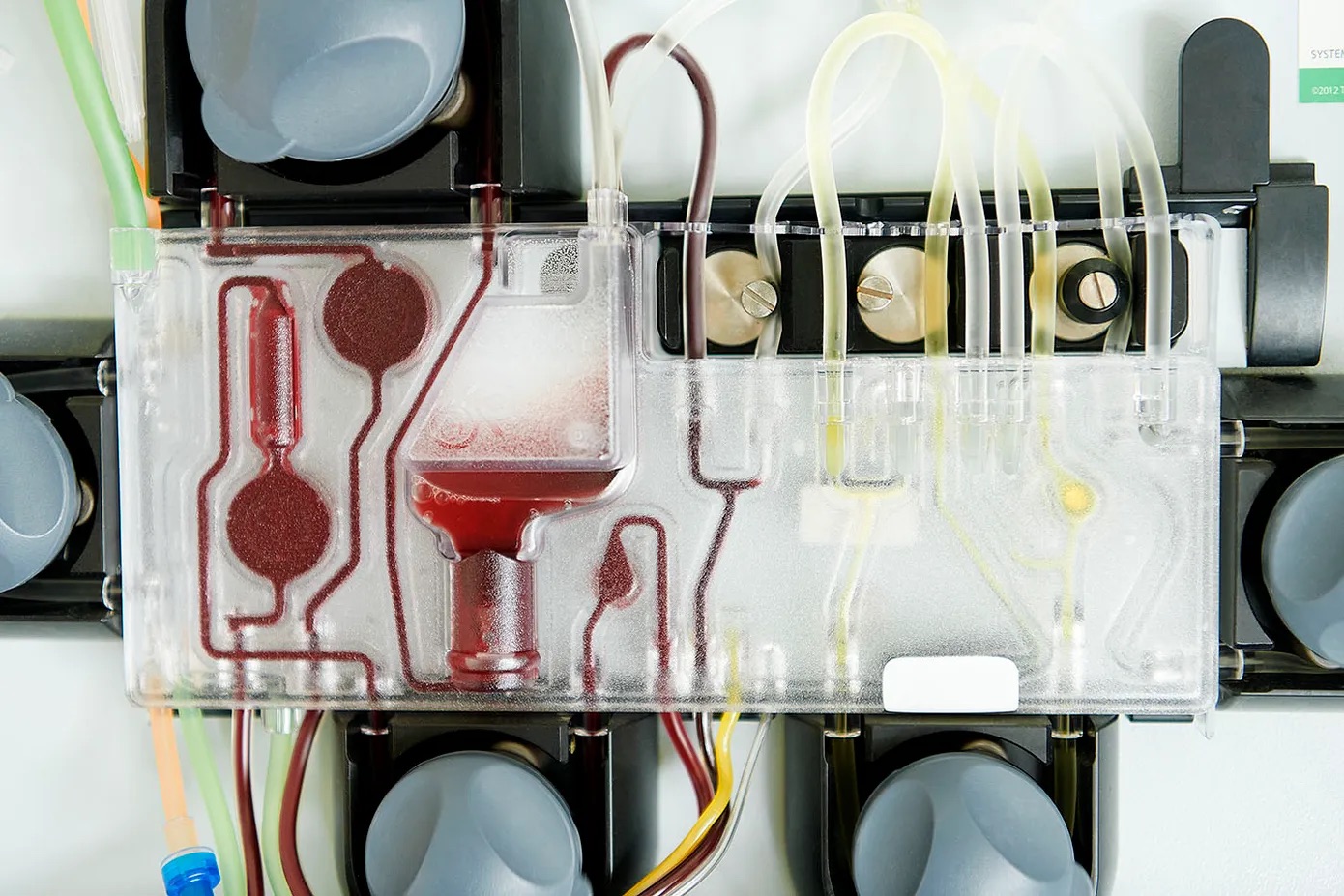
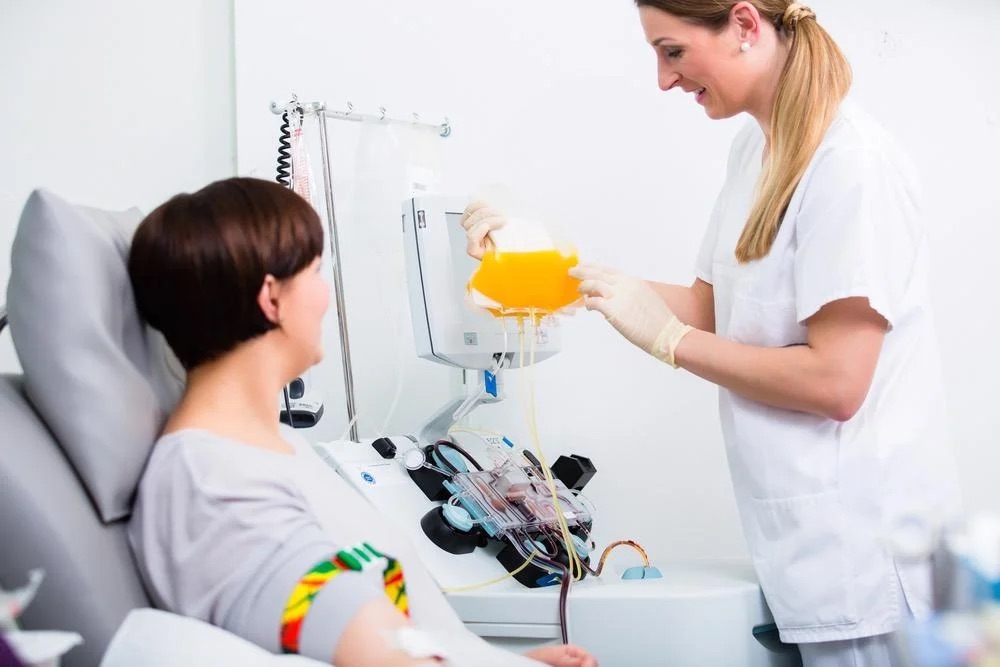
- Removal: A machine draws your blood and separates the plasma (the liquid part) from the red and white blood cells.
- Discard: The plasma—containing all the inflammatory markers, autoantibodies, and "old" signaling proteins—is discarded.
- Replacement: The blood cells are mixed with a replacement fluid, typically Albumin, and returned to your body.
Why Albumin?
Johnson’s new protocol uses Albumin, and for good reason. Albumin is a protein produced by the liver that is essential for life.
- It’s a Sponge: Albumin binds to toxins, drugs, and metabolic waste products in the bloodstream.
- It’s an Antioxidant: It neutralizes oxidative stress.
- It’s Immunomodulatory: It helps regulate the immune system.
However, albumin gets "dirty" over time. As it binds to toxins, it becomes modified and loses its function. By replacing old, modified albumin with fresh, medical-grade albumin, TPE provides a massive boost to the body's detoxification capacity.
The Results: Data Over Hype
Since switching to TPE, Johnson has reported remarkable biomarker improvements.
- Epigenetic Age: He claims to have reversed his epigenetic age by over 5 years.
- Organ Health: His markers for liver and kidney function have improved, likely due to the reduced toxic load these organs have to process.
- Systemic Inflammation: TPE is known to drastically reduce C-Reactive Protein (CRP) and other inflammatory markers, which are key drivers of arterial aging and heart disease.
The "Blood Boy" story was about vanity. The TPE story is about sanitation. It is about acknowledging that our modern environment and metabolic processes create a waste problem that our bodies eventually struggle to manage. TPE is the waste management solution.
TPE vs. Other Detox Methods
You might ask, "Can't I just detox with juice cleanses or saunas?"
The answer is no.
- Juice Cleanses: Mostly affect the digestive tract. They do not filter the blood.
- Saunas: Help sweat out some heavy metals and toxins, but the volume is microscopic compared to TPE.
- Chelation: Good for heavy metals, but doesn't remove large protein toxins or inflammatory cytokines.
- Liver/Kidney Support: Supplements support these organs, but if the organs are already overwhelmed, supplements can only do so much.
TPE is the only method that physically removes the circulating medium of the blood and replaces it. It is an oil change, not just a fuel additive.
The Future of Longevity is Subtractive
Bryan Johnson’s journey reflects the maturation of the longevity field. We are moving away from the idea of a "magic pill" or "magic potion" (like young blood) that we can add to our bodies to fix everything.
Instead, we are realizing that the body is an incredibly capable machine if we just get out of its way. The body wants to heal. It wants to regenerate. It just can't do it when it's swimming in a soup of inflammatory toxins.
Subtractive Medicine—the science of taking things away—is the next frontier.
- Removing senescent cells (Senolytics).
- Removing visceral fat (Liposuction/GLP-1s).
- Removing plasma toxins (TPE).
How You Can Benefit
You don't need a team of 30 doctors to benefit from this science. Therapeutic Plasma Exchange is an available, safe, and effective therapy for those looking to replicate the "cleaning" aspect of the Blueprint protocol.
Is it Safe?
TPE is considered very safe when performed by experienced medical teams. The risks are minimal and typically related to the IV insertion. Because it uses your own blood cells and sterile albumin, the risk of allergic reaction is extremely low compared to blood transfusions.
The VIP TPE Experience
At VIP TPE, we have adopted the protocols championed by longevity researchers. We focus on:
- Comfort: A spa-like environment for your 2-3 hour session.
- Safety: Medical oversight by specialists in apheresis.
- Customization: Tailoring the frequency and replacement fluids to your specific biomarkers and goals.
Conclusion
Bryan Johnson may have started with a sensational experiment, but he landed on a solid scientific truth: To live longer, you must keep your system clean.
The "Blood Boy" era is over. The era of Plasma Exchange has begun. It’s less cinematic, perhaps, but it’s far more effective. And unlike having a 17-year-old son on standby, TPE is something you can actually access.
If you are ready to flush out the "old" and make room for the "new," TPE is the tool you've been waiting for.
Learn more about our Longevity TPE Protocols here.
Frequently Asked Questions (FAQ)
Q: Did Bryan Johnson completely stop using his son's blood? A: Yes. He publicly stated that he discontinued the therapy because the data showed no benefit. He now focuses on TPE with Albumin.
Q: How much plasma is removed in a session? A: Typically, 1 to 1.5 plasma volumes are exchanged. For an average adult, this is roughly 3-4 liters of plasma. This ensures that about 65-70% of the circulating toxins are removed in a single session.
Q: Does TPE remove "good" things too? A: TPE is non-selective, so it removes everything in the plasma, including antibodies and some vitamins. However, the body is incredibly resilient. It replenishes the "good" proteins (like immunoglobulins and clotting factors) within 24-48 hours. The "bad" things (like senescent factors and heavy metals) take much longer to re-accumulate, giving you a net benefit window.
Q: How often does Bryan Johnson do TPE? A: While his exact schedule evolves, he has indicated doing "loading phases" (multiple sessions in a short period) followed by maintenance. A common longevity protocol is once a month or once a quarter.