Hyperviscosity Syndrome: When Blood Becomes Too Thick
Hyperviscosity Syndrome: When Blood Becomes Too Thick
Blood is designed to flow like water—smooth, fast, and able to squeeze through the tiniest capillaries to deliver oxygen to your brain and fingertips.
But in certain diseases, blood transforms. It becomes thick, sticky, and sluggish—more like syrup or sludge. This is called Hyperviscosity Syndrome.
When blood cannot flow, tissues die. Patients experience headaches, blurred vision, dizziness, and even strokes. It is a medical emergency.
And for this condition, Therapeutic Plasma Exchange (TPE) is not just a treatment; it is the immediate mechanical solution. It thins the blood instantly.
In this article, we explain the physics of Hyperviscosity and how TPE acts as the ultimate "oil change" to restore flow.
What Causes Hyperviscosity?
Hyperviscosity is usually caused by an excess of large proteins in the blood.
- Waldenström's Macroglobulinemia: A type of cancer where B-cells produce massive amounts of IgM antibodies. IgM is a huge molecule (a pentamer, meaning 5 units linked together). When IgM levels spike, they clog the bloodstream.
- Multiple Myeloma: Produces high levels of IgG or IgA antibodies.
- Cryoglobulinemia: Proteins that clump in the cold.
- Polycythemia Vera: Too many red blood cells (though this is often treated with simple phlebotomy, TPE is used in severe cases).
The Symptoms: The "Sludge" Effect
As the blood thickens, it struggles to move through the microcirculation (the tiny vessels in the eyes, brain, and kidneys).
- Neurological: Headaches, vertigo, dizziness, confusion, "brain fog," stroke-like symptoms.
- Visual: Blurred vision or vision loss. The doctor can actually see the sludge in the back of the eye (retinal vein engorgement or "sausage link" veins).
- Bleeding: Paradoxically, thick blood interferes with clotting factors, leading to nosebleeds or gum bleeding.
- Cardiac: The heart has to work overtime to pump the thick sludge, leading to heart failure.
TPE: The Instant Fix
Chemotherapy treats the cancer making the proteins, but chemotherapy takes weeks or months to work. A patient with a viscosity crisis cannot wait that long.
TPE is the bridge.
How It Works
The concept is simple fluid dynamics.
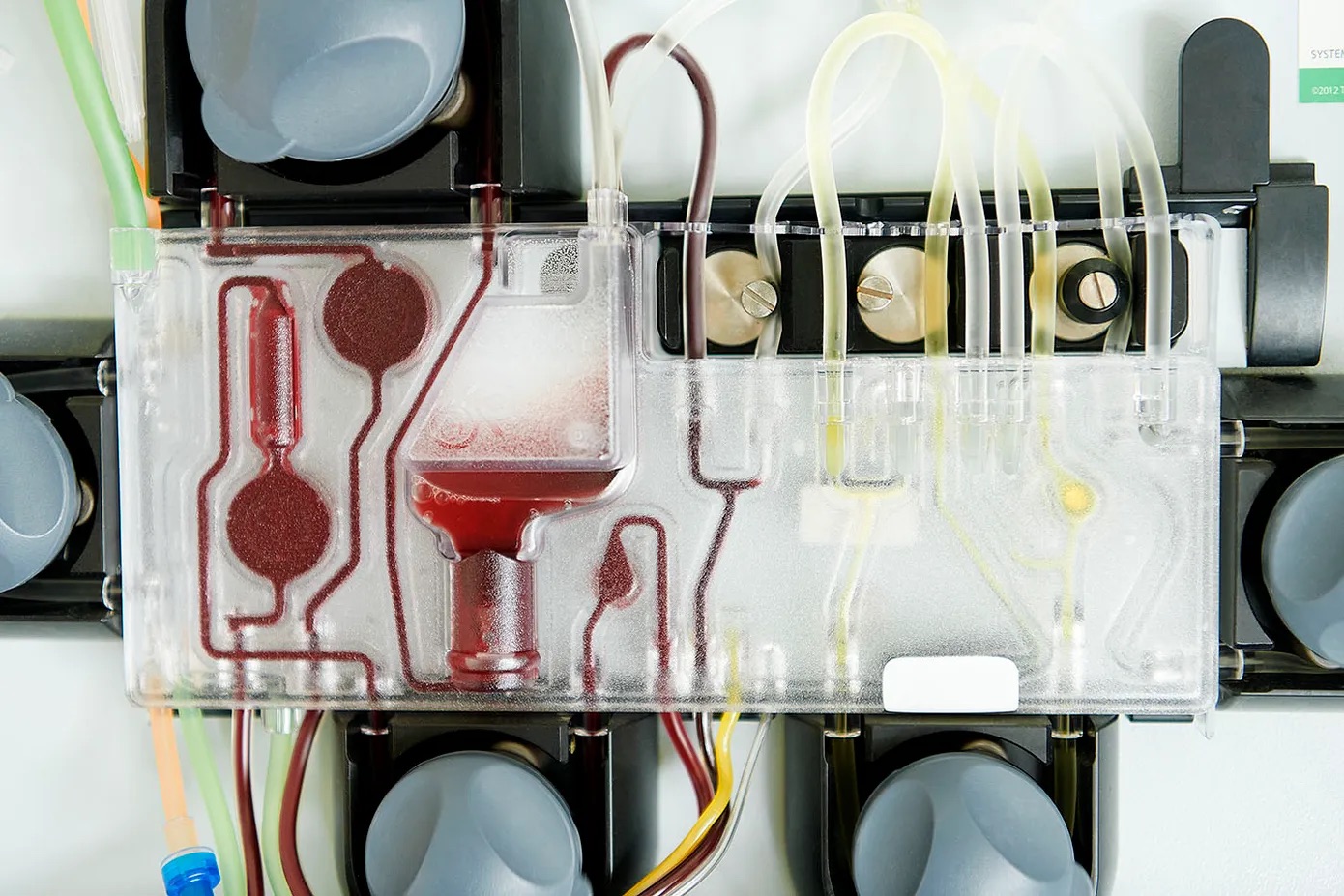
- Remove the Sludge: The apheresis machine draws the thick, protein-laden plasma out of the body.
- Replace with Fluid: We replace it with Albumin or Saline.
- Result: The viscosity (thickness) of the blood drops immediately.
The Physics of IgM: Because IgM is such a large molecule and lives mostly in the bloodstream (intravascular space), TPE is incredibly efficient at removing it. A single session can reduce the IgM level by 30-50% and lower viscosity to safe levels.
The Patient Experience
The relief is often dramatic.
- A patient walks in dizzy and confused.
- After a 2-hour TPE session, they walk out clear-headed.
- It is one of the most satisfying procedures in medicine because the correlation between "removing the protein" and "feeling better" is almost instant.
Frequency and Protocol
- Acute Crisis: 1-3 sessions are usually done daily or every other day to normalize viscosity.
- Maintenance: Some patients with chronic Waldenström's receive TPE once a month to keep their levels in check while managing the disease with mild oral chemotherapy.
Is This "Blood Thinning"?
It is important to distinguish TPE from "blood thinners" (anticoagulants) like Warfarin or Eliquis.
- Anticoagulants: Prevent chemical clotting. They make the blood less likely to clot, but they don't change its thickness.
- TPE: Changes the actual viscosity (fluidity). It physically removes the solids (proteins) that are making it thick.
Conclusion
Hyperviscosity Syndrome is a scary complication of blood cancers, but it is highly manageable with Therapeutic Plasma Exchange. It highlights the unique capability of TPE: the ability to selectively remove the "bad stuff" from your blood to restore physiology.
At VIP TPE, while we focus on outpatient care, we understand the hematological complexities of these conditions. We work with oncologists to provide supportive TPE for patients managing high protein loads, ensuring their blood—and their life—keeps flowing smoothly.
Learn More: