The Science of TPE: How Plasma Exchange Promotes Longevity
The Science of TPE: How Plasma Exchange Promotes Longevity
Therapeutic Plasma Exchange (TPE) has emerged as a groundbreaking intervention in the field of longevity medicine. Often described as an "oil change" for your blood, TPE offers a unique approach to combating the biological processes of aging. Unlike supplements or medications that add substances to the body, TPE focuses on removing harmful accumulations that build up over time. In this comprehensive article, we will delve deep into the science behind TPE, exploring how it works, what it removes, and why it holds such promise for extending human healthspan.
The Aging Blood Environment
To understand why TPE is effective, we must first understand what happens to our blood as we age. Our blood is not just a delivery system for oxygen and nutrients; it is a complex soup of signaling molecules, proteins, immune cells, and metabolic waste products. In a young, healthy individual, this environment is balanced. Growth factors promote tissue repair, inflammatory signals are transient and protective, and waste products are efficiently cleared.
However, as we age, this balance shifts. The "systemic milieu"—the environment of the blood—changes in detrimental ways.
- Accumulation of Pro-Aging Factors: Over time, our bodies accumulate damaged proteins, oxidized lipids, and other metabolic byproducts. These aren't just inert trash; many of them are active signaling molecules that tell our cells to age.
- Chronic Inflammation ("Inflammaging"): Aging is associated with a chronic, low-grade inflammation. Cytokines like IL-6, TNF-alpha, and others increase in circulation. This constant state of alert damages tissues and accelerates cellular senescence.
- Senescence-Associated Secretory Phenotype (SASP): Senescent cells—"zombie cells" that have stopped dividing but refuse to die—secrete a cocktail of harmful inflammatory factors. These factors circulate in the plasma, spreading aging to neighboring healthy cells.
This altered blood environment inhibits stem cell function, impairs tissue repair, and drives the progression of age-related diseases. The core hypothesis of TPE for longevity is simple: by removing this toxic "old blood" plasma and replacing it with fresh, neutral fluid (albumin and saline), we can reset the systemic environment to a more youthful state.
Mechanism of Action: Dilution and Reset
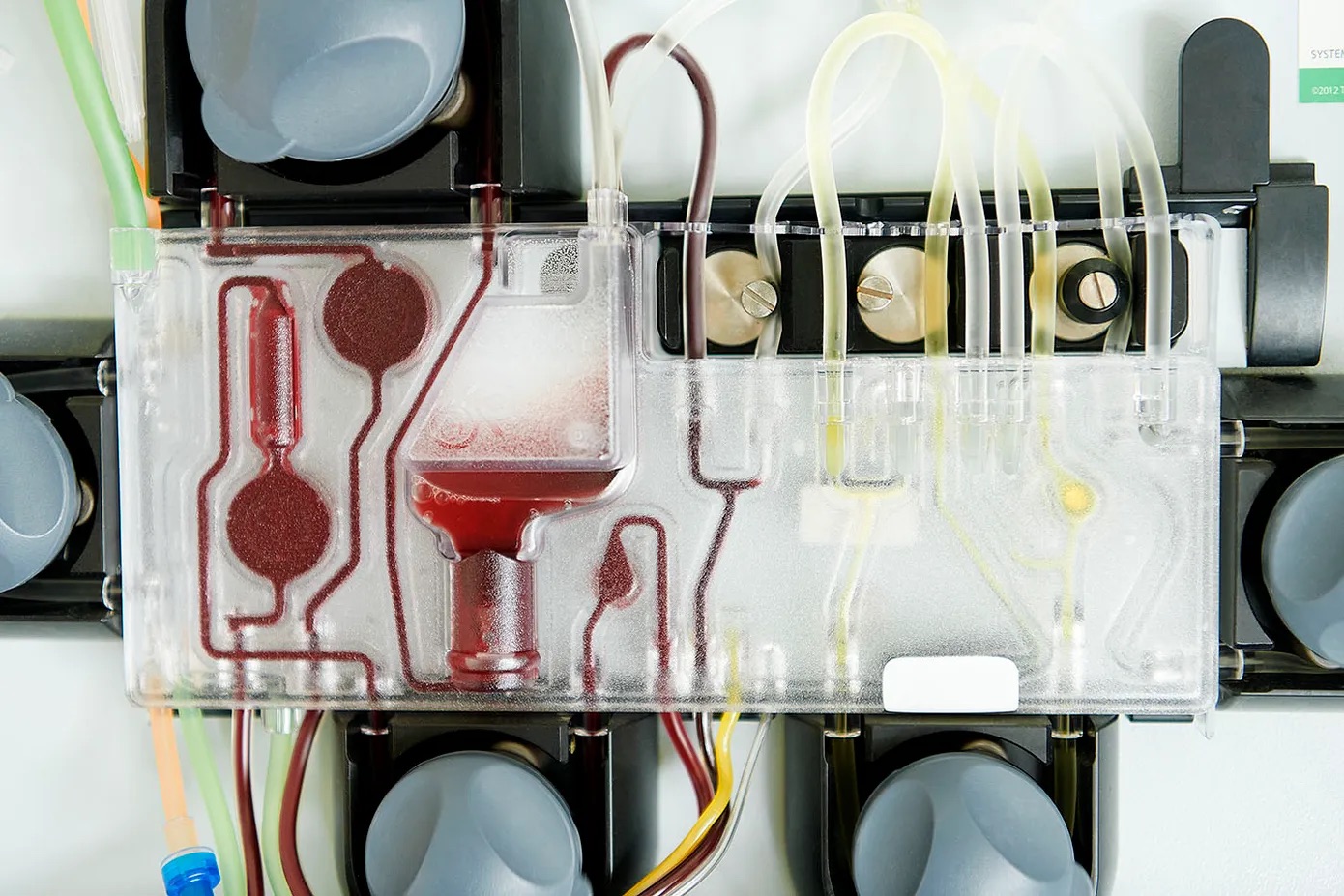
TPE works on a principle of dilution. During the procedure, the patient's blood is drawn and passed through a sophisticated medical device called an apheresis machine. This machine acts as a centrifuge or filter, separating the blood into its components based on density.
- Red Blood Cells, White Blood Cells, and Platelets: These cellular components are separated and saved.
- Plasma: The liquid portion of the blood, which contains the accumulated toxins, inflammatory cytokines, and autoantibodies, is discarded.
The cellular components are then mixed with a replacement fluid—typically a solution of 5% albumin in saline—and returned to the patient.
The "Dilution" Effect
By removing a significant volume of plasma (often 2.5 to 3 liters per session) and replacing it with clean albumin, TPE drastically lowers the concentration of circulating pro-aging factors. This is not just a 1:1 removal. The reduction follows exponential decay kinetics. A single session can reduce the concentration of a specific pathological substance by 60-70%.
But the magic happens after the procedure. The body, sensing the sudden drop in these factors, does not simply rush to restore them to pathological levels. Instead, the sudden clearance seems to trigger a "reset" of regulatory feedback loops.
- Upregulation of Youthful Factors: Interestingly, animal studies and early human data suggest that after TPE, the body increases the production of certain regenerative proteins and "youthful" factors. It's as if lifting the suppressive weight of the toxic plasma allows the body's natural repair mechanisms to breathe again.
- Restoring Albumin Function: Albumin is the most abundant protein in our blood. It acts as a carrier for hormones, vitamins, and enzymes, and it is a potent antioxidant. However, in older adults, circulating albumin often becomes damaged (oxidized or glycation). TPE replaces this old, dysfunctional albumin with fresh, functional albumin. This restores the blood's antioxidant capacity and improves its ability to transport vital nutrients.
Key Targets: What Are We Removing?
The specific "bad actors" targeted by TPE are numerous. Here are some of the key categories of molecules that are washed away:
1. Inflammatory Cytokines
Chronic inflammation is a hallmark of aging. TPE removes circulating cytokines such as:
- Interleukin-6 (IL-6): A key driver of inflammation associated with frailty and muscle loss.
- Tumor Necrosis Factor-alpha (TNF-α): Linked to insulin resistance and cardiovascular disease.
- C-Reactive Protein (CRP): A general marker of systemic inflammation. By lowering the burden of these inflammatory mediators, TPE can reduce systemic inflammation, potentially alleviating joint pain, improving metabolic health, and reducing the risk of chronic disease.
2. Autoantibodies
In autoimmune diseases, the body produces antibodies that attack its own tissues. Even in "healthy" aging, the immune system can become dysregulated, producing low levels of autoantibodies that contribute to tissue damage. TPE is the gold standard for removing these autoantibodies, giving tissues a break from immune attack.
3. Misfolded Proteins (Amyloid and Tau)
One of the most exciting areas of TPE research is in neurodegenerative diseases like Alzheimer's. The procedure has been shown to remove circulating amyloid-beta and tau proteins. While these proteins accumulate in the brain, they are in equilibrium with the blood. By lowering the levels in the blood, TPE creates a "sink" effect, pulling more amyloid out of the brain and into the blood where it can be cleared.
4. Oxidized Lipids and AGEs
Advanced Glycation End-products (AGEs) are proteins or lipids that become glycated as a result of exposure to sugars. They are a major contributor to the aging of blood vessels and skin. TPE helps clear these damaged molecules, potentially improving vascular health and skin elasticity.
Evidence from Animal Models
The foundation for TPE in longevity comes from heterochronic parabiosis studies—experiments where the circulatory systems of a young mouse and an old mouse are connected.
- The Result: The old mouse becomes younger (improved muscle regeneration, better cognitive function, healthier liver), and the young mouse becomes older.
- The Interpretation: Initially, scientists thought there was a "youth factor" in the young blood. However, subsequent research (including by Dr. Irina Conboy's lab at UC Berkeley) showed that simply diluting the old blood with saline and albumin achieved many of the same benefits as exposure to young blood. This suggests that the removal of inhibitors is just as important, if not more so, than the addition of youth factors.
In mouse models, this "neutral blood exchange" (the animal equivalent of TPE) has been shown to:
- Rejuvenate muscle repair capability.
- Improve liver regeneration.
- Enhance neurogenesis (growth of new neurons) in the hippocampus.
- Reduce neuroinflammation.
The AMBAR Trial: A Human Breakthrough
The most significant human data supporting TPE for age-related conditions comes from the AMBAR (Alzheimer’s Management By Albumin Replacement) trial. This large, randomized, controlled clinical trial involved nearly 500 patients with mild-to-moderate Alzheimer's disease. The results were profound:
- Slowing of Decline: Patients receiving TPE showed a 61% reduction in the progression of the disease compared to the placebo group.
- Cognitive Preservation: In patients with moderate Alzheimer's, TPE significantly slowed the decline in cognitive function and daily living activities.
- Biomarker Changes: The treatment reduced levels of inflammatory markers and normalized cerebrospinal fluid biomarkers related to Alzheimer's.
While AMBAR focused on Alzheimer's, the implications for general longevity are staggering. Alzheimer's is, in many ways, a disease of accelerated aging. If TPE can slow the progression of such a complex neurodegenerative condition, it suggests that the therapy is fundamentally impacting the aging process itself.
The "Oil Change" Analogy
Think of your body as a high-performance car.
- Your Cells: The engine parts.
- Your Blood: The oil.
Over time, the oil gets dirty. It accumulates grit, metal shavings, and sludge. If you never change the oil, the engine will start to grind. It will overheat. Eventually, it will seize up. You could try to pour "additives" (supplements) into the dirty oil to make it work better, but that only helps so much. The most effective maintenance is to drain the dirty oil and replace it with fresh, clean oil. That is TPE. It clears out the metabolic sludge of decades of living. It removes the friction that causes cellular wear and tear. It allows your engine—your cells—to run smoothly, efficiently, and cleanly once again.
Conclusion: A New Era of Regenerative Medicine
Therapeutic Plasma Exchange represents a paradigm shift in how we approach aging. Instead of trying to treat individual symptoms or add more chemicals to the body, TPE focuses on restoring the body's internal environment to a youthful baseline. By removing the toxic accumulation of age-related factors and replenishing with functional albumin, TPE appears to unlock the body's innate regenerative capacity. While research is ongoing to fully optimize protocols for healthy longevity, the existing science paints a compelling picture: a cleaner system is a younger system.
For those seeking to push the boundaries of healthspan and delay the onset of age-related decline, TPE offers a scientifically grounded, potent intervention. It is not science fiction; it is an established medical procedure repurposed for the ultimate goal—staying younger, longer.