Therapeutic Plasma Exchange for Alzheimer’s: Emerging Research & Hope
Therapeutic Plasma Exchange for Alzheimer’s: Emerging Research & Hope
For over a century, the fight against Alzheimer's Disease has focused almost exclusively on the brain. Scientists looked at the plaques and tangles inside the skull and tried to develop drugs to dissolve them. Billions of dollars were spent, with heartbreakingly little success.
Recently, a paradigm shift has occurred. Researchers began to ask: What if the problem—and the solution—lies not just in the brain, but in the blood?
This line of inquiry led to one of the most exciting developments in recent years: the use of Therapeutic Plasma Exchange (TPE) as a treatment for Alzheimer's. This approach, validated by the landmark AMBAR trial, suggests that by "cleaning" the blood, we can rescue the brain.
In this article, we unpack the science, the trial results, and the future of this promising therapy.
The Scientific Theory: The "Sink Effect"
To understand why TPE works for a brain disease, we need to understand how amyloid-beta (the toxic protein) travels.
- Amyloid is produced in the brain.
- It crosses the Blood-Brain Barrier (BBB) into the bloodstream.
- In the blood, roughly 90% of this amyloid binds to albumin (the most abundant protein in plasma).
Think of albumin as a "sponge" or a taxi driver. It picks up toxins, including amyloid, and carries them to the liver to be cleared. In Alzheimer's patients, this system fails. The albumin becomes "glycated" or oxidized (damaged) and full of toxins. It can no longer sponge up the amyloid from the brain. The amyloid backs up, accumulating in the brain and forming plaques.
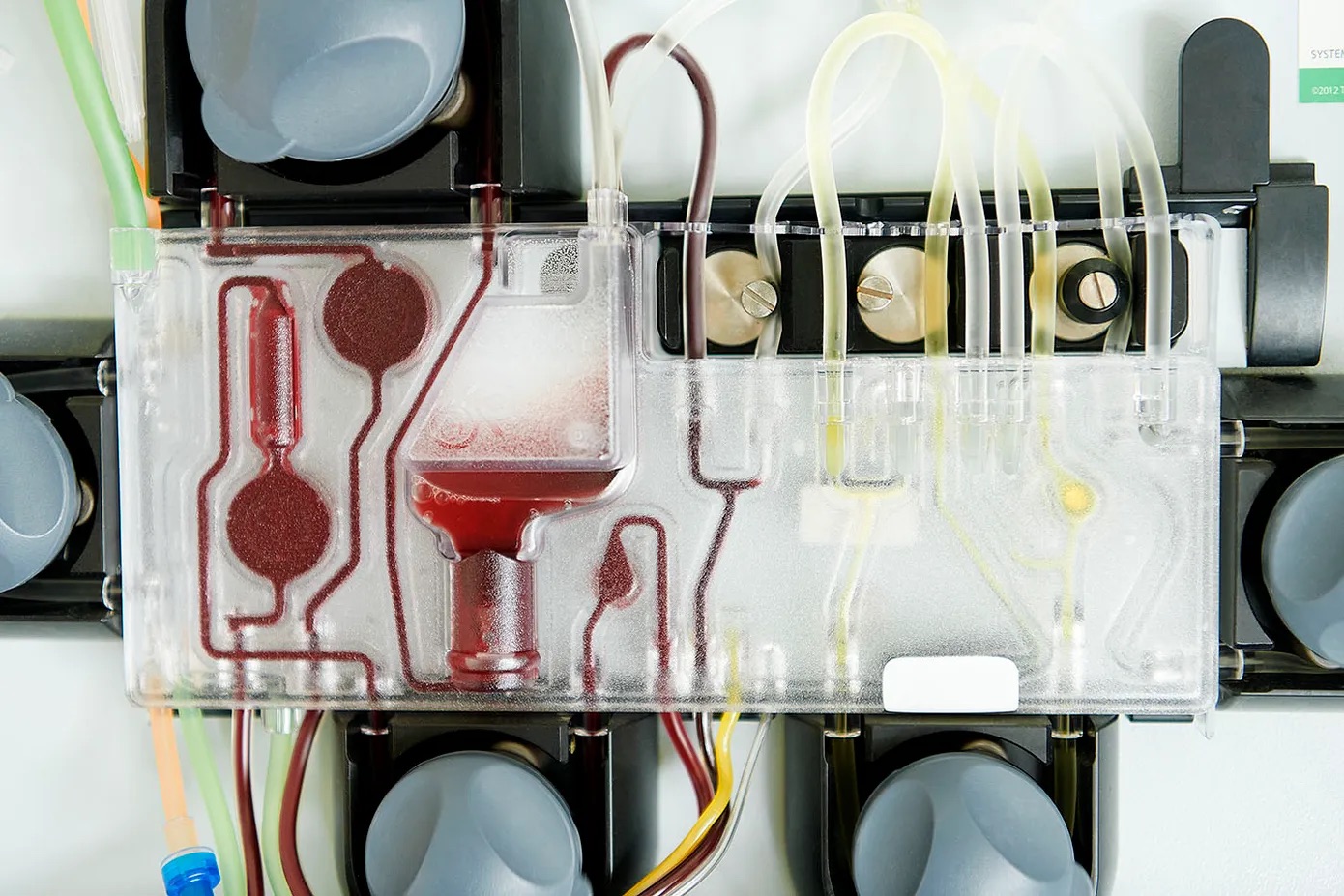
The TPE Solution: By performing Plasma Exchange, we:
- Remove the old, dirty plasma containing the amyloid-laden albumin.
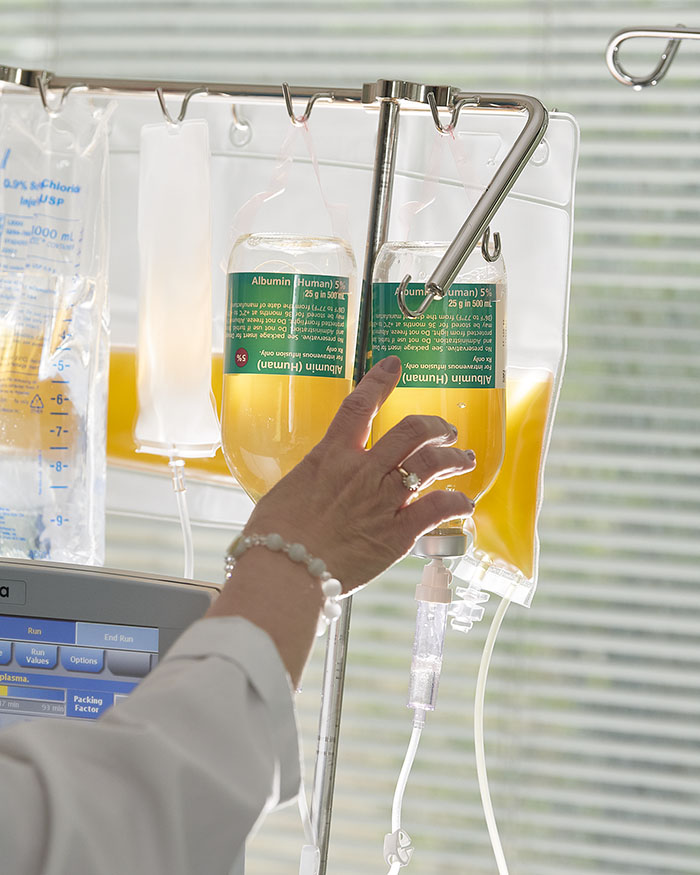
- Replace it with fresh, clean therapeutic albumin.
- Result: This restores the "sponge" capacity of the blood. The fresh albumin pulls more amyloid out of the brain (down the concentration gradient) to fill the empty binding sites. This is called the "Peripheral Sink Hypothesis." We are draining the swamp from the outside.
The AMBAR Trial: A Landmark Study
The AMBAR (Alzheimer Management By Albumin Replacement) trial was a multinational, randomized, controlled clinical trial conducted by Grifols. It involved nearly 500 patients with mild-to-moderate Alzheimer's across 41 hospitals in Spain and the USA.
The Protocol: Patients received TPE treatments over a 14-month period:
- Phase 1 (6 weeks): Intensive phase. One treatment per week to "clean out" the system.
- Phase 2 (12 months): Maintenance phase. One treatment per month to keep amyloid levels low.
The Results: Published in top peer-reviewed journals, the results were statistically significant and clinically meaningful:
- Slowed Decline: In patients with moderate Alzheimer's, disease progression was slowed by 61% compared to the placebo group. This is a massive effect size compared to most drug trials.
- Cognitive Stability: In patients with mild Alzheimer's, cognitive function (memory, language) remained stable throughout the 14-month trial. They effectively did not get worse.
- Safety: The procedure was found to be safe and well-tolerated, with most side effects being mild (like bruising or fatigue).
Beyond Amyloid: The Anti-Aging Bonus
The benefits of TPE likely go beyond just removing amyloid.
- Oxidative Stress: Old plasma is full of inflammatory cytokines ("inflammaging"). TPE removes these pro-inflammatory factors.
- Albumin's Role: Albumin is a powerful antioxidant. Replacing old, damaged albumin with fresh albumin revitalizes the body's antioxidant defenses. This aligns with "heterochronic parabiosis" studies (young blood experiments) in mice, where old mice rejuvenated when exposed to young plasma factors. TPE is essentially a safe, medical version of this concept.
Who is a Candidate?
Based on the research, TPE is most effective when started early.
- Mild Cognitive Impairment (MCI) & Mild Alzheimer's: This is the "sweet spot." The brain tissue is still largely intact, and removing the toxic load can preserve function.
- Moderate Alzheimer's: TPE can significantly slow the decline, preserving quality of life and independence for longer.
- Severe Alzheimer's: Unfortunately, once massive neuronal death has occurred, TPE cannot bring those cells back. It is generally not recommended for late-stage dementia.
The Future of TPE in Neurology
The success of the AMBAR trial has opened the floodgates. TPE is now being viewed not just as a "rescue" for acute autoimmune attacks, but as a chronic management tool for neurodegeneration.
Current research is exploring:
- Combination Therapy: Using TPE to "clear the path" before administering anti-amyloid drugs (like Leqembi) to potentially increase efficacy and safety.
- Preventative Protocols: Could at-risk individuals (those with the APOE4 gene) use periodic TPE to prevent the buildup of amyloid before symptoms ever start?
Conclusion
Therapeutic Plasma Exchange represents a beacon of hope in a field that has seen too many failures. It offers a logical, mechanical solution to a biological problem: if the blood is dirty, clean it. By restoring the body's natural ability to clear toxins, TPE empowers the brain to heal and function. For families facing an Alzheimer's diagnosis, it is a viable, evidence-based option worth exploring today.