TPE and Alzheimer's Disease: What the AMBAR Trial Reveals
TPE and Alzheimer's Disease: What the AMBAR Trial Reveals
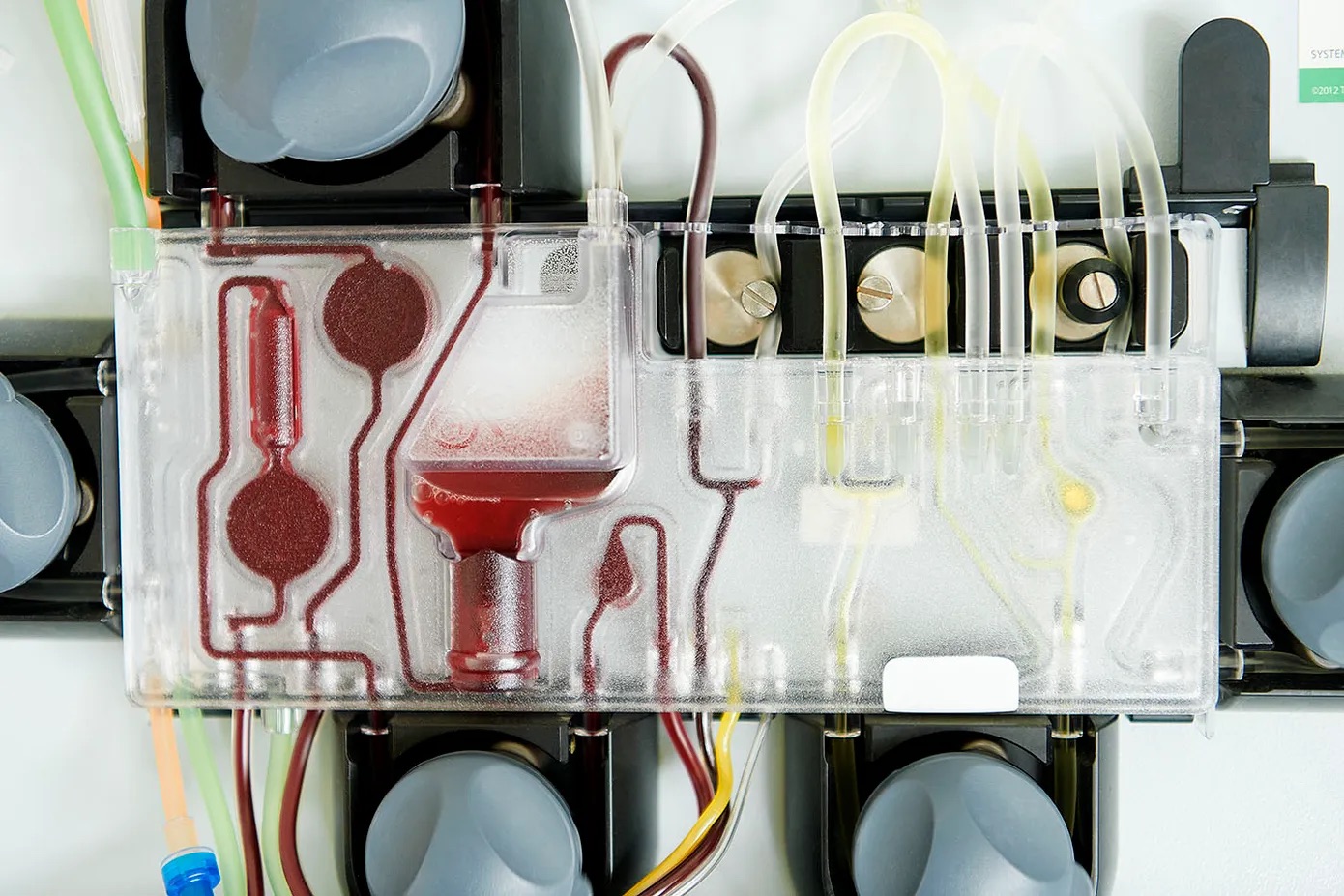
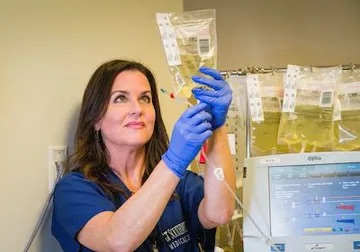
Alzheimer's Disease (AD) remains one of the most dauting challenges in modern medicine. For decades, the search for a cure has been a graveyard of failed drugs and dashed hopes. Most treatments have focused on targeting amyloid plaques in the brain, with limited success. However, a different approach—one that looks outside the brain to the blood—has shown remarkable promise. This approach is Therapeutic Plasma Exchange (TPE), and the study that put it on the map is the AMBAR trial.
In this article, we will explore the groundbreaking AMBAR trial, dissect its results, and explain why TPE represents a beacon of hope for patients with Alzheimer's and a critical proof-of-concept for longevity medicine.
The Theory: The Peripheral Sink Hypothesis
To understand why a blood treatment would help a brain disease, we need to look at the "Peripheral Sink Hypothesis." Alzheimer's is characterized by the accumulation of sticky proteins called amyloid-beta (Aβ) in the brain. These form plaques that are toxic to neurons. For years, scientists tried to design drugs to cross the blood-brain barrier and attack these plaques directly. However, Aβ isn't just in the brain; it circulates in the blood (plasma) as well. The brain and the blood are in a constant state of equilibrium regarding Aβ. The protein can cross the blood-brain barrier in both directions.
- The Idea: If you can lower the level of Aβ in the blood, you change the concentration gradient. You create a "vacuum" or a "sink" that pulls Aβ out of the brain and into the blood, where it can be cleared away.
- The Role of Albumin: Albumin, the main protein in plasma, acts as a "sponge" or transporter for Aβ. In Alzheimer's patients, albumin is often damaged (oxidized) and less effective at binding Aβ.
The AMBAR (Alzheimer’s Management By Albumin Replacement) trial was designed to test this hypothesis: Could removing old plasma (containing unbound Aβ and inflammatory markers) and replacing it with fresh albumin (capable of binding Aβ) slow the progression of the disease?
The AMBAR Trial Design
Conducted by Grifols, a global healthcare company, the AMBAR trial was a multinational, randomized, blinded, and placebo-controlled Phase 2b/3 clinical trial. It was rigorous, robust, and ambitious.
- Participants: The study enrolled 496 patients with mild-to-moderate Alzheimer's disease across 41 hospitals in Spain and the USA.
- Duration: The treatment period lasted 14 months—a significant duration for a clinical trial, allowing for the observation of long-term effects.
- Protocol:
- Intensive Phase (6 weeks): One TPE session per week. This phase was designed to "clean house" and drastically reset the plasma environment.
- Maintenance Phase (12 months): One TPE session per month. This phase aimed to maintain the benefits.
- Control Group: Patients received a "sham" procedure (simulated TPE) to rule out the placebo effect.
The Results: A Clinical Breakthrough
The results, published in the peer-reviewed journal Alzheimer's & Dementia, were nothing short of historic.
1. Slowing Cognitive Decline
The primary endpoints measured changes in cognition (memory, reasoning) and function (activities of daily living).
- Global Effect: across the entire treatment group, TPE slowed the progression of the disease.
- Moderate AD: The results were most striking in patients with moderate Alzheimer's. In this group, the progression of cognitive decline was reduced by 61% compared to the placebo group. This is a magnitude of effect rarely, if ever, seen in AD trials.
- Mild AD: In patients with mild Alzheimer's, cognitive function remained stable, similar to the placebo group (as mild AD progresses slowly), but they showed significant benefits in other areas.
2. Preserving Daily Functioning
It's not just about memory tests; it's about life. The trial measured the CDR-SB (Clinical Dementia Rating Sum of Boxes) and ADCS-ADL (Alzheimer's Disease Cooperative Study – Activities of Daily Living).
- Patients receiving TPE showed significantly better preservation of their ability to perform daily tasks—dressing, eating, interacting with family—compared to those who did not receive treatment.
3. Safety
Crucially, the trial demonstrated that long-term TPE is safe and feasible in an elderly population. The side effects were manageable and consistent with known TPE procedures (mostly related to venous access).
Mechanisms Beyond Amyloid
While the trial was based on the amyloid sink hypothesis, the results suggest something more complex is happening. The benefits of TPE likely stem from a multi-modal mechanism:
- Removing Amyloid: Yes, Aβ was removed, pulling it from the brain.
- Reducing Inflammation: Alzheimer's involves significant neuroinflammation. TPE removes systemic inflammatory cytokines that cross into the brain and fuel the fire.
- Restoring Albumin Antioxidant Power: Oxidative stress is a major killer of neurons. By replacing oxidized albumin with fresh albumin, TPE restores the body's primary antioxidant defense.
- Improving Blood Flow: TPE improves hemorheology (the flow properties of blood). By removing fibrinogen and other large proteins, blood viscosity decreases, potentially improving microcirculation and oxygen delivery to the brain.
Why This Matters for Everyone (Not Just AD Patients)
The AMBAR trial is a watershed moment for longevity medicine because it validates the concept of systemic rejuvenation. If TPE can arrest the progression of a disease as devastating and complex as Alzheimer's, it proves that the composition of our blood is a primary driver of aging and degeneration. It confirms that "old blood" is toxic and that "cleaning" it can have profound downstream effects on our most vital organ, the brain.
For healthy individuals interested in longevity, the AMBAR trial provides a strong safety and efficacy signal. It suggests that TPE is not just a theoretical "biohack" but a clinically validation intervention that targets the root causes of cellular degeneration.
The Future of Neuroprotection
Following the success of AMBAR, further research is underway. New trials are exploring TPE in earlier stages of cognitive decline and even as a preventative measure. At our clinic, we view TPE as a cornerstone of neuroprotective strategy. Whether you are managing a family history of dementia, experiencing "brain fog," or simply want to protect your cognitive assets as you age, the lessons from AMBAR are clear: keeping your plasma clean and your albumin functional is key to a healthy brain.
Conclusion
The AMBAR trial shifted the paradigm of Alzheimer's research from "attacking the plaque" to "treating the system." It demonstrated that by managing the plasma environment—removing the bad and replenishing the good—we can alter the trajectory of neurodegeneration. TPE is currently the only therapy that addresses multiple pathologies of Alzheimer's simultaneously: amyloid burden, inflammation, oxidative stress, and vascular health. As we continue to refine these protocols, TPE stands as one of the most promising tools we have to preserve our minds and memories well into our golden years.