Stiff Person Syndrome: The Science Behind the Stiffness and TPE Solutions
Stiff Person Syndrome: The Science Behind the Stiffness and TPE Solutions
For decades, Stiff Person Syndrome (SPS) was a medical mystery—a rare entry in neurology textbooks that few doctors ever saw. That changed when global superstar Celine Dion revealed her diagnosis, shedding light on a condition that traps the body in a cage of its own muscles.
SPS is a rare, progressive neurological disorder. It turns the simple act of walking into a Herculean task. It causes muscle spasms so violent they can fracture bones. It creates a heightened sensitivity to noise and touch, where a car backfiring can trigger a full-body seizure-like spasm.
There is no cure for SPS. However, there are treatments. Among them, Therapeutic Plasma Exchange (TPE) stands out as a critical therapy for managing the immune driver of the disease.
In this article, we delve into the mechanism of SPS and how plasma exchange helps patients regain mobility and reduce pain.
The Mechanism: The Brakes Are Cut
To understand SPS, you need to understand GABA.
Gamma-aminobutyric acid (GABA) is the primary inhibitory neurotransmitter in the brain and spinal cord. Think of GABA as the "brakes" of your nervous system. It tells your muscles to relax. It tells your nerves to calm down.
In Stiff Person Syndrome, the immune system produces antibodies that attack the enzyme responsible for making GABA. This enzyme is called GAD65 (Glutamic Acid Decarboxylase).
- High GAD65 Antibodies: Patients with SPS have extremely high levels of antibodies attacking GAD65.
- The Result: Your body can't make enough GABA.
- The Symptom: Without the "brakes," the nerves fire constantly. The muscles contract and stay contracted. The result is rigid, board-like muscles and uncontrollable spasms.
Symptoms of Stiff Person Syndrome
- Fluctuating Rigidity: Muscles in the trunk and abdomen become rock hard.
- Hyperlordosis: The back muscles become so tight they arch the spine excessively.
- Startle Spasms: Unexpected noises or touches trigger severe spasms.
- "Tin Soldier" Walk: Walking becomes stiff and labored; patients often have a fear of falling (task-specific phobia).
Treating SPS: The Role of TPE
Standard treatment involves boosting GABA (using drugs like Valium/Diazepam or Baclofen) to try and manually apply the brakes. But this treats the symptom, not the cause.
To treat the cause, we must address the autoimmune attack.
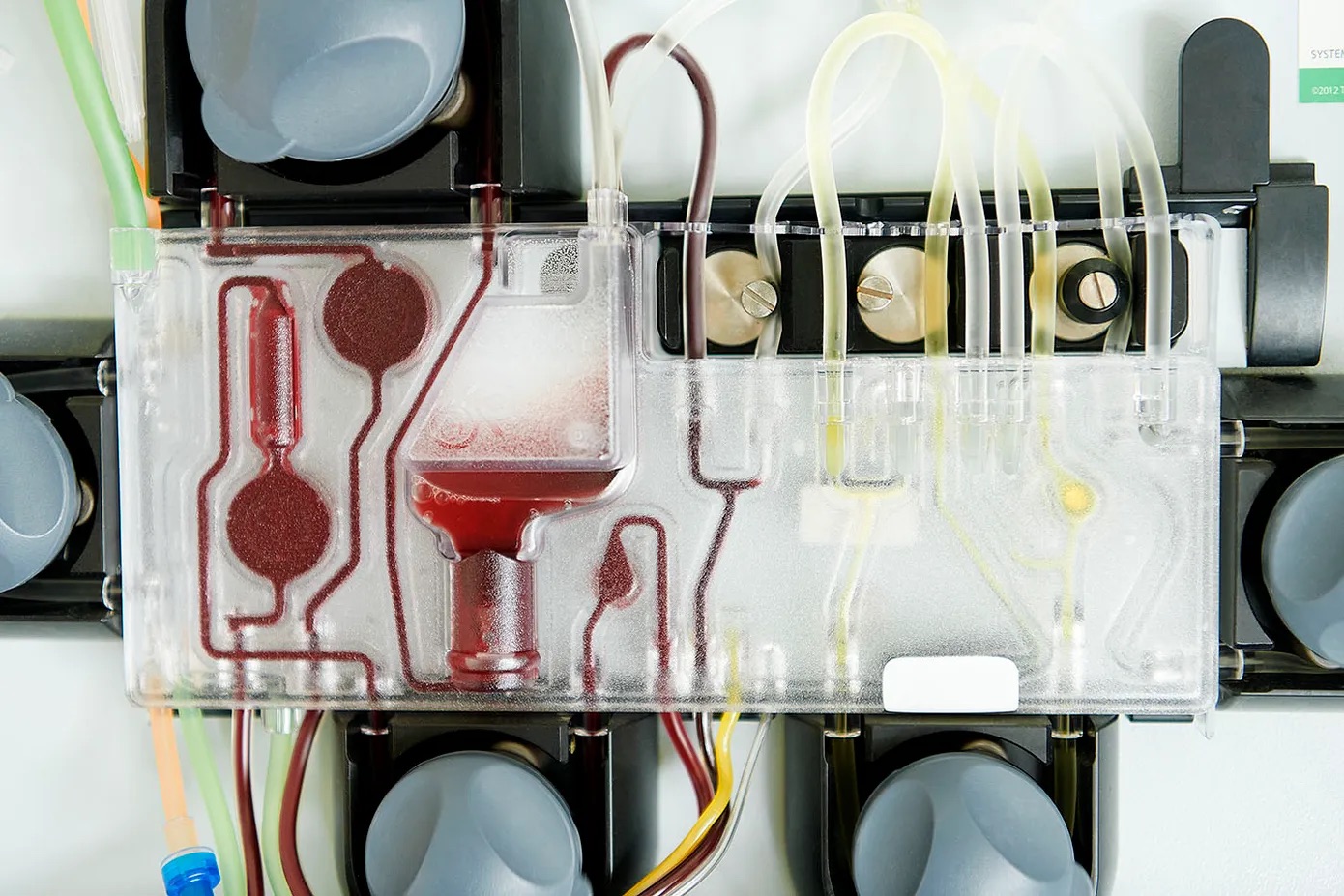
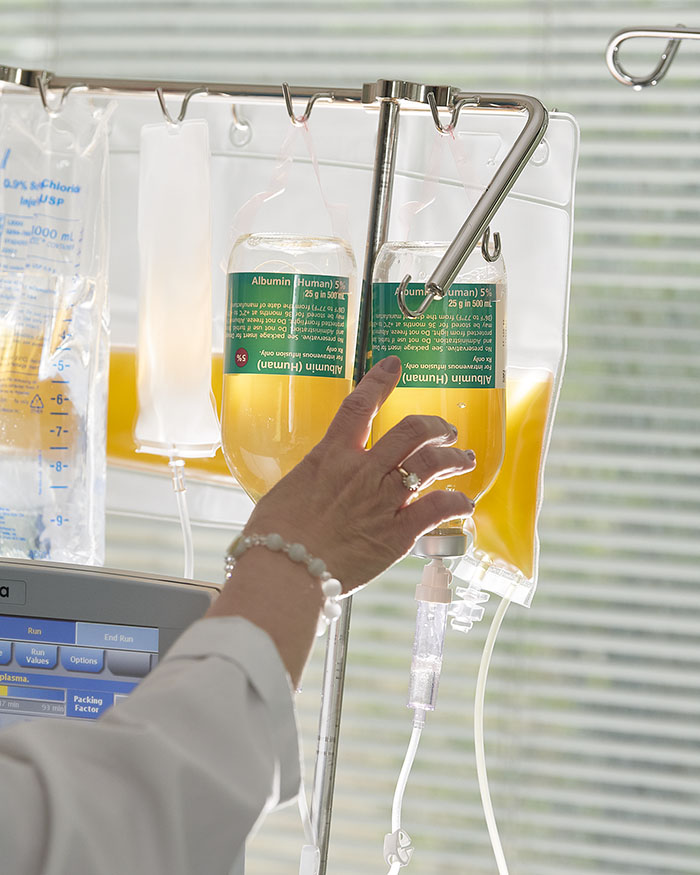
Therapeutic Plasma Exchange works by removing the Anti-GAD65 antibodies from the circulation.
1. Reducing the Antibody Load
SPS patients often have antibody titers that are "off the charts." TPE physically filters the blood, discarding the plasma containing these antibodies.
- Impact: By lowering the antibody load, the attack on the GAD65 enzyme is reduced.
- Result: The body can produce more GABA (or the existing GABA works better), allowing muscles to relax.
2. Clinical Improvements
Patients undergoing TPE for SPS often report:
- Reduced frequency of spasms.
- Softer muscle tone (less "board-like").
- Improved ability to walk.
- Reduced need for high doses of sedating medications (Valium).
3. The Protocol
Unlike an acute attack where we do 5 sessions and stop, SPS is a chronic condition. TPE is often used as a maintenance therapy.
- Induction: A series of 5-6 exchanges to lower the antibody levels rapidly.
- Maintenance: A single session every 2-4 weeks to keep the levels low.
- Combination: TPE is often combined with IVIG or Rituximab for long-term control.
Is TPE Right for Every SPS Patient?
SPS is a spectrum.
- Classic SPS: Highly responsive to immunotherapy (TPE/IVIG).
- Paraneoplastic SPS: SPS caused by an underlying cancer (breast, lung). In these cases, treating the cancer is priority, but TPE helps manage symptoms.
- GAD-Negative SPS: A small percentage of patients don't have the GAD antibody but still have symptoms. TPE may still work by removing other unidentified inflammatory factors.
The Patient Experience
Living with SPS is isolating. The fear of a spasm in public keeps many patients homebound. TPE offers a way to reclaim independence.
At VIP TPE, we provide a calm, controlled environment essential for SPS patients.
- Quiet Suites: We minimize noise and sudden movements to prevent startle spasms.
- Comfort: Our recliners and warm blankets help relax the muscles during the 2-hour procedure.
- Support: We work closely with your neurologist to adjust the frequency based on your symptoms.
Conclusion
Stiff Person Syndrome is a heavy burden, but you do not have to carry it alone. By targeting the root cause—the rogue antibodies—Therapeutic Plasma Exchange offers a window of relief in a rigid world.
If you have been diagnosed with SPS and are struggling to manage symptoms with medication alone, ask your doctor about TPE.
Related Articles:
- TPE vs. IVIG (Note: This is a planned future post, referencing generalized comparison logic).
- Autoimmune Diseases Guide
- Contact VIP TPE