Vascular Access for TPE: Peripheral IVs vs. Ports and PICC Lines
Vascular Access for TPE: Peripheral IVs vs. Ports and PICC Lines
"Will it hurt?" "Do I have good enough veins?" "Do I need surgery just to get the treatment?"
These are the first questions patients ask when considering Therapeutic Plasma Exchange (TPE).
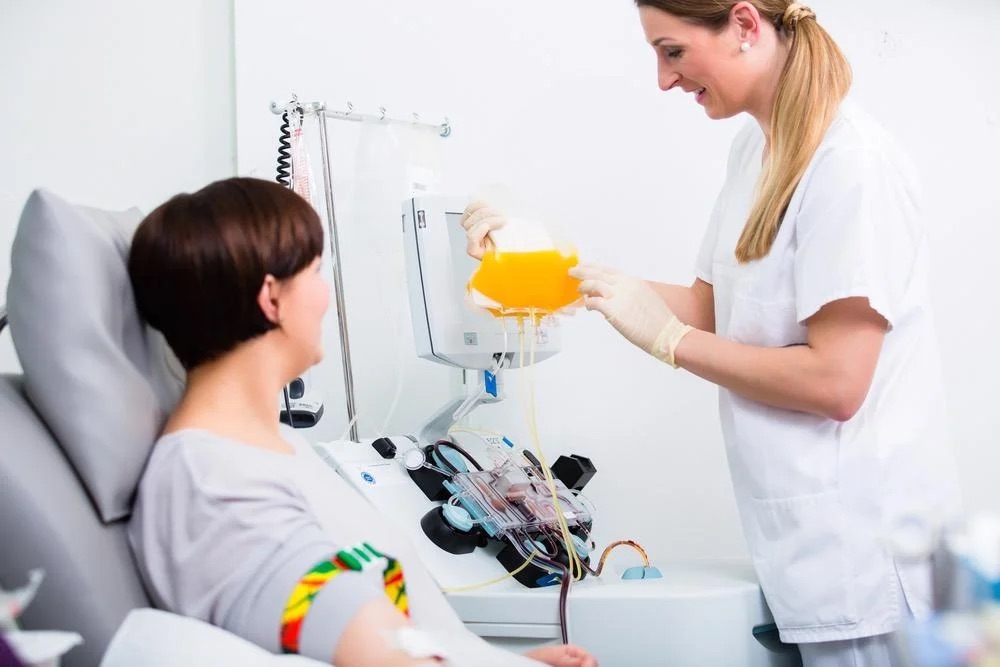
Unlike a simple blood draw or a vitamin drip, TPE requires high-flow access. We are pulling blood out at 50-80 mL/min, separating it, and pushing it back in. This requires a robust vein that won't collapse under the pressure of the machine.
The success of your treatment depends entirely on your "access." Without good flow, the machine alarms, the procedure stops, and everyone gets frustrated.
In this guide, we break down the three main options: Peripheral IVs (Arms), Ports (Chest), and PICC Lines (Arm Catheters).
Option 1: Peripheral Access (The Gold Standard)
At VIP TPE, our goal is always to use peripheral access first. This means two standard IVs: one in each arm (or sometimes both in the same arm if veins are excellent).
How It Works
- Draw Line (Red): A large-bore needle (16G or 17G) is placed in a large vein, usually in the antecubital fossa (the elbow ditch). This is where the blood comes out.
- Return Line (Blue): A smaller needle (18G or 20G) is placed in any other vein (hand, forearm). This is where the blood goes back in.
Pros
- Non-Invasive: No surgery. No permanent device in your body.
- Lower Infection Risk: Once the needle is out, the risk is gone.
- Convenience: You go home with nothing but a Band-Aid.
Cons
- Needles Every Time: You get stuck every session. If you are doing a 5-session series, that is 10 needle sticks.
- Vein Fatigue: Veins can get scarred or "tired" after repeated use.
- Restricted Movement: You cannot bend your arms during the 2-hour procedure (unless the IV is in the forearm).
Who is it for?
- Patients with visible, "bouncy" veins.
- Athletes and men (who typically have larger veins).
- Patients doing a short course (1-5 treatments).
Option 2: Implanted Port (Vortex / PowerPort)
For patients with "bad veins" or those needing long-term maintenance (e.g., Chronic Lyme, Alzheimer's prevention), an implanted Port is a game-changer.
How It Works
A small titanium or plastic drum is surgically placed under the skin of your chest. A catheter runs from the drum into a large vein near your heart.
- The Procedure: Quick outpatient surgery (twilight sedation).
- The Access: During TPE, the nurse accesses the port with a special needle (Huber needle).
Pros
- One Stick: Only one needle is needed for the port (usually for the Draw). The Return can often be done through a small arm vein, or a double-lumen port can handle both.
- Hands-Free: Your arms are free! You can read, text, or work on a laptop during TPE.
- Durability: Ports can last for years.
- No Pain: Once healed, accessing a port is often less painful than digging for a deep arm vein.
Cons
- Surgery: It is a surgical procedure with risks (though minor).
- Scar: You will have a small scar on your chest.
- Visibility: A small bump is visible under the skin (though cosmetic options exist).
Who is it for?
- Patients with "rolling" or tiny veins.
- Patients planning on monthly treatments for years.
- Patients who want to work/type during treatment.
Option 3: PICC Line or Central Line (The Temporary Fix)
A PICC (Peripherally Inserted Central Catheter) is a long tube inserted into the upper arm that goes to the heart.
Pros
- No Sticks: The line hangs out of your arm. You just hook up.
- Reliable Flow: Excellent blood flow.
Cons
- High Maintenance: You must keep it dry (no swimming, careful showering). It must be flushed daily.
- Infection Risk: High risk of infection because a tube is sticking out of your body 24/7.
- Clotting Risk: Higher risk of DVT in the arm.
Verdict: We generally avoid PICC lines for outpatient TPE unless absolutely necessary for a short burst of treatment (e.g., a severe PANDAS flare where arm veins are blown). They are too risky for long-term wellness.
Option 4: A-V Fistula (The Kidney Dialysis Route)
Rarely used for TPE. An AV Fistula surgically connects an artery to a vein to make a "super vein." This is standard for kidney dialysis patients who need treatment 3x/week for life. It is almost never done for TPE alone due to the permanent alteration of your anatomy.
Making the Decision
At your initial consultation at VIP TPE, our vascular access experts will examine your arms using an ultrasound vein finder.
- Grade A Veins: We proceed with peripheral IVs.
- Grade B/C Veins: We might try peripheral, but will discuss a Port if you are doing a long protocol.
- Anxiety: If you have a phobia of needles, a Port is often the kindest option for your mental health.
Your comfort is our priority. Whether it's numbing cream, ultrasound guidance, or a referral to a top vascular surgeon for a port, we ensure the "hook-up" is the easiest part of your day.
Questions? Contact our Nursing Team