What is Therapeutic Plasma Apheresis?
What is Therapeutic Plasma Apheresis?
You may have heard the terms "Therapeutic Plasma Exchange (TPE)," "Plasmapheresis," and "Apheresis" used interchangeably. While they are related, understanding the specific technology behind Therapeutic Plasma Apheresis helps demystify the treatment.
Apheresis comes from the Greek word apheresis, meaning "to take away." In medicine, it refers to the process of passing a person's blood through a machine that separates out one particular component and returns the rest.
How the Machine Works
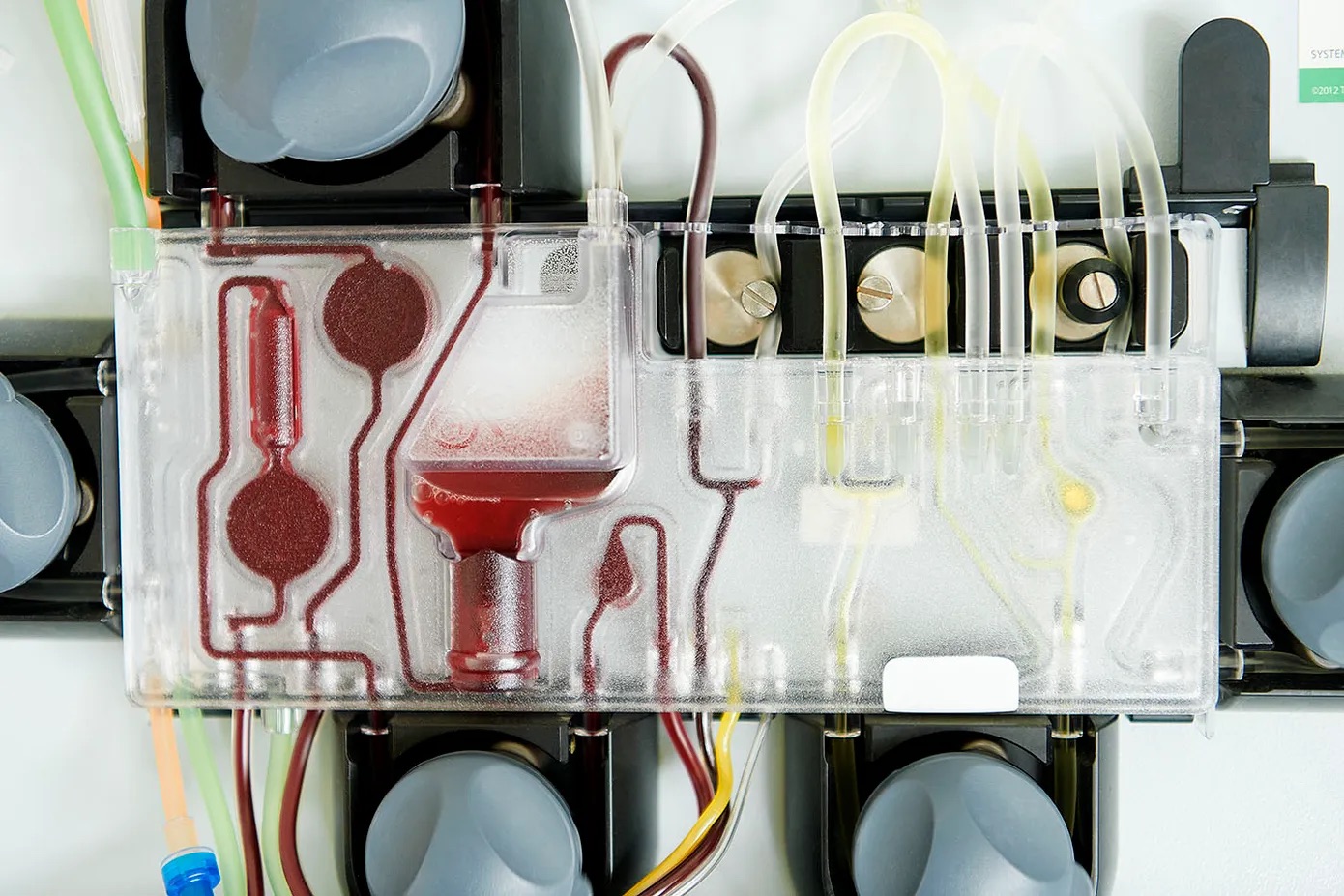
Modern apheresis machines (like the Spectra Optia or Amicus) are marvels of engineering. They use centrifugation to separate blood based on density.
- The Draw: Blood is drawn from the patient's arm and enters the machine.
- The Spin: Inside a centrifuge bowl or belt, the blood spins at high speed.
- Heaviest: Red blood cells spin to the outside.
- Middle: White blood cells and platelets (the "buffy coat") settle in the middle.
- Lightest: Plasma (the yellow liquid) stays in the center.
- The Separation: Optical sensors detect the interface between these layers with microscopic precision.
- The Extraction: The machine siphons off only the plasma layer.
- The Return: The red cells, white cells, and platelets are mixed with a replacement fluid (like albumin) and returned to the patient's other arm.
Why Do We Remove Plasma?
Plasma is the liquid carrier of the blood. It transports nutrients and hormones, but in disease states, it also transports the "bad guys":
- Autoantibodies: That attack your own tissues (Myasthenia Gravis, MS).
- Immune Complexes: Clumps of antibodies that clog kidneys (Lupus).
- Toxins & Inflammatory Proteins: Drivers of aging and neurodegeneration.
- Cholesterol: In LDL Apheresis, we specifically remove bad cholesterol.
By removing the plasma, we remove the disease-causing agents suspended in it.
Is It Safe?
Yes. Apheresis is a standard procedure used daily in hospitals and blood donation centers (when you donate just platelets or plasma, that is apheresis!).
- Sterility: The "kit" (tubing and bowl) is single-use and sterile. Your blood never touches the machine itself, only the disposable tubing.
- Volume Control: The machine tracks every drop of fluid in and out to ensure your blood volume remains stable, preventing drops in blood pressure.
Conclusion
Therapeutic Plasma Apheresis is essentially a "deep clean" for your blood. It uses gravity and physics to separate the helpful cells from the harmful plasma, offering a precise, mechanical way to treat complex diseases without adding drugs to the body.